Cycling in Yorkshire & Beyond

Cycling in Yorkshire & Beyond

Stage 8 of the Tour de France 2024 is a 183.4km flat stage from Semur-en-Auxois to Colombey-les-deux-Eglises.
There are five categorised climbs in the first part of the stage, which may favour a breakaway. As the parcours flattens later on, the sprinters' teams should be able to close the gap.
The finish straight is 3km long, and an uphill drag.
These are video highlights of Stage 8.
This is the Stage 8 blog/race report.
Race Details | Poll | Map & Profile | Timings | Videos | Food & Drink | Route Notes | Favourites
| Date | Saturday 6th July 2024 |
|---|---|
| Stage classification | Flat |
| Distance | 183.4km |
| Intermediate sprint | Lamargelle |
| Climbs | Côte de Vitteaux (Cat. 3) Côte de Villy-en-Auxois (Cat. 4) Côte de Verrey-sous-Salmaise (Cat. 3) Côte de Santenoge (Cat. 4) Côte de Giey-sur-Aujon (Cat. 4) |
| Total climbing | 2,400m |
Vote for one of the main contenders to win Stage 8.
This is a map of the route of Stage 8, Tour de France 2024.

This is a zoom-able map of the route of Stage 8 of the 2024 Tour de France.
Note: this routemap was produced a long time in advance of the race, and could be subject to changes.
This is the profile of Stage 8 Tour de France 2024.

| Caravan | Fast Schedule | Slow Schedule | |
|---|---|---|---|
| Start Time (départ fictif) | 1105 |
1305 |
1305 |
| Start Time (départ réel) | 1120 |
1320 |
1320 |
| Intermediate Sprint Lamargelle | 1244 |
1437 |
1444 |
| Côte de Giey-sur-Aujon Climb | 1415 |
1600 |
1615 |
| Finish Line (183.4km) | 1542 |
1719 |
1742 |
This is a video of the route of Stage 8 Tour de France 2024.
The last time the Tour de France started in Semur-en-Auxois was on Stage 6 of the 2007 edition, when the riders headed to a sprint finish in Bourg-en-Bresse.
Bradley Wiggins made a long but doomed breakaway effort that day.

Colombey-les-deux-Eglises is in the Haute-Marne, and one local cheese is Langres, made on the Langres plateau.
It's a soft cheese made from cow's milk and matured for at least 21 days, during which time it is often rubbed with brine.
The Haute Marne département is part of the Grand Est region, which includes Champagne-making areas like Troyes and Reims.
Bouchons de Champagne are Champage-inspired chocolates in the shape of Champagne corks, filled with a Champagne liqueur.
And of course when in the Grand Est there's every excuse to drink a glass of Champagne.
Buy a bottle of Moët et Chandon Champagne (affiliate link).
The stage starts in Semur-en-Auxois (départ fictif), half way between Auxerre and Dijon.

Semur-en-Auxois has a Medieval centre, built on a pink granite bluff within a loop of the river Armançon.
The river once powered water mills and tanneries.
In the centre of town is Place Guéneau de Montbeillard, named after an Encyclopédiste of that name - someone who contributed to the development of the Encyclopedia in the 1700s.
Military engineer Vauban was educated in the Carmelite college here. Maybe the defensive towers inspired him.
The towers are what remain of a fortified castle, built in the 1200s. The one in the picture above looks as though it has a crack in the stonework, but nothing a bit of Polyfilla and a spatula wouldn't sort out.
I'm available for structural repairs to buildings, at very reasonable rates.
The church is la Collégiale Notre-Dame, founded in 1225 and built in flamboyant Gothic style.
The race organisers wax lyrical about Semur: 'As the sun sets, Semur-en-Auxois takes on a magical glow. Built on a bluff of pink granite, the city is filled with colours, which are sure to leave you enchanted and inspired'.
The riders head east out of Semur-en-Auxois to Villenotte, and the départ réel is just after that village.
The parcours continues to Pouillenay, which has a marble quarry, then heads south on the D905 by a river called la Brenne. It passes the Parc de l'Auxois, an animal park.

Next up is a village called Posanges, which has an imposing château.

The Château de Posanges was built by Guillaume du Bois in the 1400s. It has a 15m-wide moat.
After 21km, the peloton reaches Vitteaux.

Here, the race leaves the river Brenne and heads east. The first categorised climb is called the Côte de Vitteaux.
The Côte de Vitteaux takes the riders up towards the Grande Montagne. (Big Mountain is not a particularly inspired name for a hummock. Someone call lost property - the locals' imagination has gone missing!)
This climb is 2km at an average gradient of 7.3%, to a height of 493m after 24.1km raced.
The descent is to Villy-en-Auxois, on the Ozerain river.

Instead of admiring the village, the riders will have to get ready for the next climb, the Côte de Villy-en-Auxois.
The Côte de Villy-en-Auxois is 2.4km at an average 5.5%, to a height of 480 after 32.5km raced.
The descent is to Verrey-sous-Salmaise, on the river Oze.

The same pattern as before is repeated: into a valley and up the other side. In this case, the climb is called the Côte de Verrey-sous-Salmaise.
The climb of the Côte de Verrey-sous-Salmaise is 2.9km at an average 6%, to a height of 518m after 38.8km raced.
The race continues to Bligny-le-Sec and Saint-Seine-l'Abbaye.

Saint-Seine-l'Abbaye is on a stream called l'Ougne.
Its name makes reference to the Benedictine Abbey that was founded here in the 500s. The abbey was named after the founder, Sigo, but the name gradually changed to Seine - influenced by the fact that the source of the river Seine is nearby (a little to the north west, at a place called...can you guess? Source Seine).
The abbey only had two monks left at the time of the French Revolution, when it stopped being a monastery.
Only the abbey church now remains.

Now Stage 8 follows a stream called l'Ougne to Vaux-Saules. It continues to Lamargelle, on the river Ignon, where the intermediate sprint takes place.
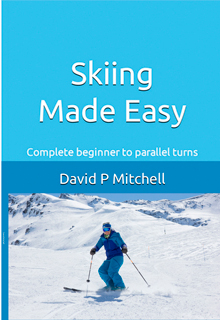
Skiing Made Easy is a practical guide to learning to ski based on many happy seasons of ski teaching.
It takes you through the beginner's progression from snowplough to parallel turns, starting at the very beginning and not assuming any prior knowledge.
The book suggests relevant exercises to develop and improve your skills. Common faults are identified, along with the best ways to correct them.
'By the way' sections contain information about many of the little things that people assume you just know, but you may not.
'This is the book I wish I'd had when I started skiing' - reviewer on Amazon.
How to buy:
From Lamargelle, the route wends its way north through countryside to Echalot, Minot and Beneuvre. The riders pass the Mont Aigu just after Beneuvre.
Stage 8 then follows the river Ource to Santenoge.

Immediately after the village the road tilts up. This is the Côte de Santenoge.
The road passes close to the top of La Grande Montagne - the second Big Mountain of the day!
The climb is 1.1km at an average 8.1%, to a height of 459m after 96.7km raced.
The descent is to Auberive, on the river Aube.
Auberive is a commune in the Haute Marne that is 70% covered in forests. The village grew up around a Cistercian Abbey from 1135.
According to the race organisers, the abbey reached its apogee in the 1200s. Good use of the word 'apogee'! In the 1500s, an abbey palace was built. The abbey was rebuilt in the 1700s.
After the French Revolution, the abbey became a cotton mill, then a factory, then a women's prison. It was a monastery again from 1927 to 1960.
The abbey is now a contemporary arts centre. There are festivals and live music in Summer.

The stage route then follows the river north to Baye-sur-Aube.
A little north of Bay-sur-Aube, the riders leave the river and tackle an unclassified climb before descending to Saint-Loup-sur-Aujon. Can you guess which river it's on? Correct, the Aujon.
The riders stay in the Aujon valley for a couple of kilometres as far as Giey-sur-Aujon, before climbing away from the river.
The climb of the Côte de Giey-sur-Aujon is 1.2km at an average 8.4%, to a height of 396m after 122.4km.
The next village is Bugnières, then Leffonds and Crenay. Crenay is on the river Suize, and has a canal too.

Stage 8 follows the river to Neuilly-sur-Suize and Chaumont.

After trundling through a lot of very small villages today, the race finally reaches a decent-sized town in Chaumont (Haute-Marne).
Chaumont is near the confluence of the Suize and the Marne. Chaumont means 'bald hill', and it was built on a rock overlooking the Suize and Marne valleys. It was the seat of the Counts of Bassigny in Medieval times.
In 1814, Britain, Austria, Prussia and Russia signed a Treaty here, in which they agreed to continue war against France until it returned to its 1792 boundaries.
Chaumont was bombed in 1940 and 1944. From 1951 to 1967, there was a US airforce base here.
The railway viaduct, built in 1856, is a striking feature of Chaumont.

Chaumont hosts a Festival of Posters and Graphic Design. It has a talented volleyball team.
Now the riders head north west via Jonchery and Juzennecourt to Colombey-les-Deux-Eglises.
The race comes into Colombey on the long straight line of the road that is described either as the D619 or the Route Nationale 19.
The finish line is near the junction with Rue de la Montagne.

The Stage 8 finish town is Colombey-les-Deux-Eglises.
It's a one horse town, if that. Maybe more like a miniature horse or pony. The reason it is known to anyone other than people who live there is that General Charles de Gaulle bought a large house there in 1934, and retreated to it on the occasions when he was out of front-line politics.

De Gaulle died in Colombey in 1970, and he is buried in the cemetery there. His house is now a museum.

A 43m high Cross of Lorraine stands at the western exit of the village, commemorating de Gaulle's role as commander of the Free French in World War II. The Cross of Lorraine was the symbol of Free France at that time. It has got two crossways lines instead of one.
The Cross of Lorraine probably dates back to the Byzantine Empire, and it was adopted by René II Duke of Lorraine in the 1400s.
The Cross of Lorraine was a symbol of French ambitions to recover the land it lost in Lorraine following the Franco-Prussian War of 1871.
Charles de Gaulle (1890-1970) was born in Lille, and was a decorated officer in World War I.
During the German invasion of 1940, he led an armoured division that counter-attacked the invaders.
He did not accept the armistice with Germany, and he fled to England. He exhorted the French to continue fighting in an Appeal of 18th June. He led the Free French forces in World War II.
De Gaulle became head of the Provisional Government in 1944, but resigned in 1946. He came back to power in 1958.
He resigned as President in 1969 and died the following year.

Stage 8 ends in an uphill sprint, albeit only a 3% gradient. That should suit Lidl-Trek's Danish former World Champion, Mads Pedersen.
Equally, a pure sprinter might win - Jasper Philipsen, Mark Cavendish or Dylan Groenewegen.
Who do you think will win Stage 8 of the 2024 Tour de France?

Massage gun deep tissue, price £19.99 from Amazon at the time of writing (affiliate link).
As an Amazon Associate, I can theoretically earn a small commission from qualifying purchases.

New in 2023, Bike Rides in the Yorkshire Dales is available in colour paperback.
Find out more about Bike Rides in the Yorkshire Dales or buy a copy.
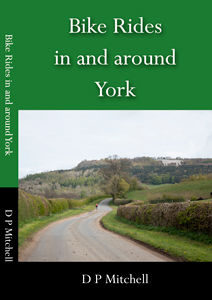
Bike Rides In and Around York features a historical city tour, plus family rides, road rides, and mountain bike rides.
Find out more about Bike Rides In and Around York or buy a copy.
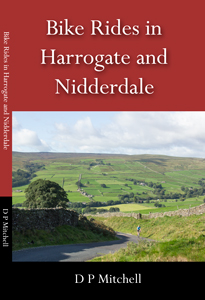
Bike Rides in Harrogate and Nidderdale is a book of family, mountain and road bike rides.
Find out more about Bike Rides in Harrogate and Nidderdale or buy a copy.
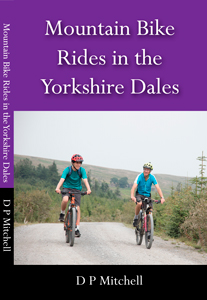
Find out more about Mountain Bike Rides in the Yorkshire Dales.
Buy Mountain Bike Rides in the Yorkshire Dales at £8 + P&P.
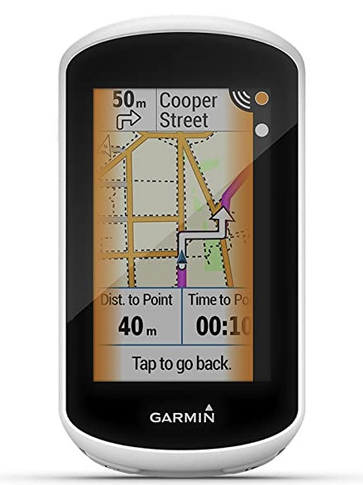
Garmin Edge Explore, £197.99 at the time of writing.
Garmin Edge Explore on Amazon (affiliate link).

Faster by Michael Hutchinson on Amazon (affiliate link).


