Cycling in Yorkshire

Cycling in Yorkshire

Stage 2 of the Tour de France 2023 is a 208.9km hilly road stage from Vitoria-Gasteiz to Saint-Sebastián. It is based on the San Sebastián Classic.
There's no shortage of hills throughout the day; the organisers say that the terrain is rugged and merciless.
Towards the end of the parcours, there's an ascent of the Jaizkibel (in the opposite direction to the Clásica San Sebastián), followed by 16km of a long descent then flat roads to the finish line.
It's on the Jaizkibel climb that a selection is likely to be made, defining who is in the mix for the stage win.
These are video highlights of Stage 2 of the Tour de France 2023.
This is the Stage 2 TDF2023 Blog.
Race Details | Poll | Map & Profile | Timings | Videos | Food & Drink | Route Notes | Favourites
| Date | Sunday 2nd July 2023 |
|---|---|
| Stage classification | Hilly |
| Distance | 208.9km |
| Intermediate sprint | Legutio |
| Climbs | Col d'Udana (Cat. 3) Côte d'Aztiria (Cat. 4) Côte d'Alkiza (Cat. 3) Côte de Gurutze (Cat. 4) Jaizkibel (Cat. 2) |
This is a map of the route of Stage 2, Tour de France 2023.

This is a zoom-able map of the route of Stage 2 of the 2023 Tour de France.
This is the profile of Stage 2 Tour de France 2023.

| Caravan | Fast Schedule | Slow Schedule | |
|---|---|---|---|
| Start Time (départ fictif) | 1015 |
1215 |
1215 |
| Start Time (départ réel) | 1025 |
1225 |
1225 |
| Col d'Udana | 1224 |
1413 |
1424 |
| Jaizkibel | 1506 |
1641 |
1706 |
| Finish in San Sebastián (208.9km) | 1531 |
1704 |
1731 |
This is a video overview of the route of Stage 2 Tour de France 2023.
The Tour de France has produced a short video as a teaser for the Grand Départ in the Basque country.
The President of the Basque Country, Inigo Urkullu Renteria, said:
'Fans will turn out in force and pump up the festive atmosphere that Basque supporters are known for...the colourful Basque tide that infuses legendary mountains with joy will sweep through our own climbs, coast, towns and villages.'
According to BBC Good Food, San Sebastián specialities include grilled anchovies fresh from the ocean - either on their own, or as part of a gilda, which is a type of pintxos (small plate). A gilda is a small skewer with anchovy, olive and pepper.
For dessert, you could indulge in a pastel vasco or Basque cake, with a biscuit-like crust and a creamy filling.
To drink with Stage 2, you could stick with local Txakoli white wine, traditionally poured from a height into a tall glass.

Buy a bottle of Txakoli on Amazon.
If you prefer red, Navarre is not far away, justification enough to taste a red Navarra wine.


The stage starts in Vitoria-Gasteiz (départ fictif), the capital of Alava Province and the seat of the Basque institutions.

Vitoria-Gasteiz is the capital city of the northern Province of Alava and of the Basque Country (Wikipedia). It has the Basque Parliament, government HQ, and Prime Minister's residence.
Wikipedia says inhabitants of the city are informally known as babazorros, or bean sacks.
There may have been a Roman settlement here, and the present-day Vitoria-Gasteiz might have been built on the site of a Roman camp by Vizigoth King Liuvigild in 581AD. This is not certain, and the Vizigoth settlement could have been elsewhere.
Industries include healthcare, aeronautics and automotives. Vitoria is known as a green city, and ranks highly on quality of life.
There are acclaimed wineries.
The peloton leaves the city heading east on the N-104. The départ réel is just outside the built-up area, after the suburb of Arcaute/Arkauti and near an agricultural school.
As you can see from the stage profile, the first 50km or so are on a plateau that's around 600m above sea level.
The first part of the ride on the plateau involves the riders going east to Alegria-Dulantzi, then turning north towards the Ullibarri-Gamboa Reservoir.

The Ullibarri-Gamboa reservoir was built in the 1950s, and some villages in the Gamboa valley were flooded as a result. In Summer when the water level is low, you can see the ruins.
It's the largest reservoir in the Basque Country, and it provides water to Vitoria-Gasteiz and to Bilbao. It's a Natura 2000 site, and the south eastern end is also protected as a Ramsar wetland.
Zuhatza is the largest island in the reservoir, and it's known as the island of rabbits. There are cabins on the island, used as holiday accommodation, and visitors practice water sports.

The next reservoir is Urrunaga, which hosts rowing races at an international regata.
The peloton continues north along the shore, passing through the little town of Legutio. The intermediate sprint is at Legutio.
The route then follows the A-2620 on the shore of the Albina Reservoir. After this reservoir, Stage 2 heads to Mirador Aramaio, a viewpoint over the local area.
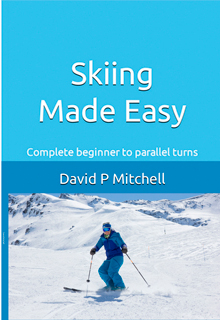
Skiing Made Easy is a practical guide to learning to ski based on many happy seasons of ski teaching.
It takes you through the beginner's progression from snowplough to parallel turns, starting at the very beginning and not assuming any prior knowledge.
The book suggests relevant exercises to develop and improve your skills. Common faults are identified, along with the best ways to correct them.
'By the way' sections contain information about many of the little things that people assume you just know, but you may not.
'This is the book I wish I'd had when I started skiing' - reviewer on Amazon.
How to buy:
Then there's a long descent from the plateau towards Arrasate-Mondragon.

After 60.9km raced, the riders reach Arrasate (in Basque) or Mondragon (Spanish).

Arrasate-Mondragon is a town best known for the Mondragon Corporation, founded in 1956 by Catholic Priest José Maria Arizmendiarreta. The first product it made was paraffin heaters. Now its main areas of activity are finance, industry, retail, and knowledge (education and innovation). It's the biggest business in the Basque Country.
Arizmendiarreta had founded a technical college in 1943, and he taught solidarity and participation to his students. He put this into practice when establishing Mondragon as a cooperative with five young people.
Mondragon Corporation is a collection of cooperatives. The principles of solidarity and participation are still applied today. One aspect of this is that pay ratios of executives vs manual workers are relatively low - on average, 5:1.
Stage 2 continues to Onati, and from there the first categorised climb starts, the Col d'Udana.
The climb of the Col d'Udana is 4.5km at an average 5.1%, reaching a height of 515m. The summit is after 81.3km raced.
There's a descent to Mirandaola/Legazpi, where there is a working iron foundry. In the 1400s, there were seven of them here.

Then the second climb starts straight away - the Côte d'Aztiria.
The Côte d'Aztiria is 2.7km at an average 5.3%, reaching 572m at the top, after 87.6km raced.
Next the race heads down to the Oria valley to the settlements of Segura, Beasain and Ordizia.
Then the road goes up the valley of the Amundarain to Zaldiba. An uncategorised climb follows, to Larraitz-Txindoki.

Stage 2 descends to Amezketa, before going over another hill on the way to Tolosa, in Oria valley.

Now the next climb begins, the Côte d'Alkiza.

The Côte d'Alkiza is 4.2km at an average 5.7%, reaching 324m at the top after 140.9km of the stage.
After this hilly detour the race drops back down to Villabona on the Oria river, and continues in the valley to Andoain, before heading for Urnieta and Hernani (40m above sea level).
The peloton is a stone's throw from Donostia-San Sebastián now, but it doesn't take the direct route there.
The parcours is via Astigarraga and Oiartzun. Then there's a short climb, the Côte de Gurutze.
The Côte de Gurutze is 2.6km at 4.7%. The top is at 150m after 174.2km raced.
The descent is to Irun/Mendelu, near San Sebastián airport. The route passes the airport, which is by the Marina at Hondarribia, where the river Bidasoa widens out just before flowing into the Bay of Biscay.

The border with France splits the Bidasoa, with Hendaye Water Sport Centre and Hendaye beach on the French side of the water.
The riders skirt Hondarribia. Now the final climb begins, the Jaizkibel.

The final climb is the Jaizkibel, ascending the opposite side to that used for the Clásica San Sebastián.
On the way up the road passes the Sanctuary of Guadalupe, a hermitage from the 1500s.
It's 8.1km at an average 5.3%. The summit is at 192.5km raced.
The race up to this point will have been attritional, and some domestiques will have been used up. The Jaizkibel climb is likely to be where the attacks happen, and a decisive point in the race.
If you can get over the top with a lead, there are 16.5km left - of downhill then flat.
There's also the extra incentive of this being the Bonus point of the stage, with time bonuses of 8, 5 and 2 seconds available.
The Jaizkibel is an area of high ground overlooking steep cliffs and the Bay of Biscay.

After the summit, it's downhill to the commercial and fishing port of Pasaia. The race goes around the port to the San Sebastián suburb of Herrera.
It continues on a road called Jose Elosegi Alkatearen hiribidea, then Ategorrieta hiribidea and Nafarroa hiribidea. Hiribidea is Basque for 'avenue'.
Stage 2 reaches the seafront at Zurriola hiribidea, by Zurriola beach, and crosses the Urumea Itsasadarra to the Old Town.

The finish line is on Boulevard Zumardia, in front of the Tourist Office (and the Carrefour Express supermarket) and close to the Town Hall.

Donostia-San Sebastián is a city in the Basque Autonomous Community of Spain (Wikipedia). It is the capital of the Gipuzkoa Province, and the population is around 188,000.
It is on the coast of the Bay of Biscay and 12 miles from the border with the French Pays Basque. There are close links with Bayonne, France. The Bay of Biscay is known as the Gulf of Gascony in France.
Donostia and San Sebastián both mean 'St Sebastian.'
Like Bilbao, San Sebastian has quite a cloudy and rainy climate.
There were Roman settlements here from 50 to 200AD.
Modern San Sebastián was founded in 1180 by Sancho el Fuerte. It was a port and military stronghold, named after the nearby monastery San Sebastián.
The city belonged to Pamplona then Castile (early 1200s), then Navarre (1265).
In the Peninsula War it was captured by Napoléon (1808), then re-taken by British and Portuguese troops under the Duke of Wellington (1813). Much of the city was destroyed at this time by an artillery barrage and subsequent fire.
The city's economy is largely based on commerce and tourism. San Sebastián's popularity as a destination for visitors grew after Queen Isabel II visited to take salt water treatments for her skin, starting in 1845.
It has a dynamic cultural scene, and was European Capital of Culture in 2016. There's a San Sebastián Jazz Festival and an International Film Festival.
San Sebastián is renowned for Michelin-starred restaurants serving Basque cuisine, and for small-plate dishes called pintxos.
Real Sociedad is the local football club, and Arsenal manager Mikel Arteta is from San Sebastián.
San Sebastián is twinned with Plymouth, UK.

Who are the favourites for Stage 2 of the Tour de France 2023?
Is it possible that a breakaway group will form on the climb of the Jaizkibel and stay away to the finish? I think so. In that case, the favourites today could be similar to those on Stage 1: riders who can excel on a Classics-type climb and still have speed in the legs for a flat finish.
If so, it could be a day for Wout van Aert, Julian Alaphilippe, Tom Pidcock, or Mathieu van der Poel.
We shouldn't discount the possibility that sprinters-who-can-climb
will hang on up the Jaizkibel, or catch up on the descent. That may
mean that Biniam Girmay, Mads Pedersen, Caleb Ewan and some others may
have a chance of winning.
Who do you think will win Stage 2 of the 2023 Tour de France in San Sebastián?

Bradt Guide to the Basque Country.

The Elikliv Cycle Camera is basic and affordable, and does the job.
Price £32.99 from Amazon at the time of writing.

New in May 2023, Bike Rides in the Yorkshire Dales is available in colour paperback.
Find out more about Bike Rides in the Yorkshire Dales or buy a copy.
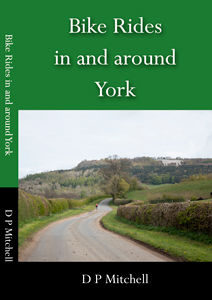
Bike Rides In and Around York features a historical city tour, plus family rides, road rides, and mountain bike rides.
Find out more about Bike Rides In and Around York or buy a copy.
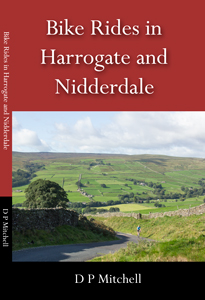
Bike Rides in Harrogate and Nidderdale is a book of family, mountain and road bike rides.
Find out more about Bike Rides in Harrogate and Nidderdale or buy a copy.
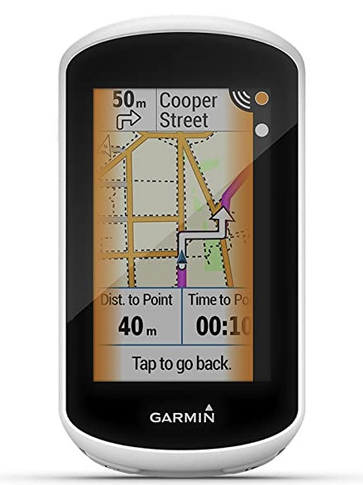
Garmin Edge Explore, £220 at the time of writing.

Price £10.11 from Amazon at the time of writing.


