Cycling in Yorkshire

Cycling in Yorkshire

Stage 1 of the Tour de France 2023 is a 182km road race. It starts and finishes in Bilbao, and in between it is a hilly coastal tour of Biscay. There's 3,300m of climbing.
The Côte de Pike is a steep climb (2km at 10%) which comes 10km before the finish, and is likely to smash the peloton to smithereens. The final kilometre before the finish line is also uphill at 5.4%.
All this should allow a puncheur or a GC contender to take the first yellow jersey.
These are video highlights of Stage 1 Tour de France 2023.
This is the Stage 1 TDF 2023 Blog.
Race Details | Poll | Map & Profile | Timings | Videos | Food & Drink | Route Notes | Favourites
| Date | Saturday 1st July 2023 |
|---|---|
| Stage classification | Hilly |
| Distance | 182km |
| Intermediate sprint | Gernika-Lumo |
| Climbs | Côte de Laukiz (Cat. 3) Côte de San Juan Gaztelugatxe (Cat. 3) Côte de Morga (Cat. 4) Côte de Vivero (Cat. 2) Côte de Pike (Cat. 3) |
Vote for one of the main contenders to win Stage 1.
This is a map of the route of Stage 1, Tour de France 2023.

This is a zoom-able map of the route of Stage 1 of the 2023 Tour de France.
This is the profile of Stage 1 Tour de France 2023.

| Caravan | Fast Schedule | Slow Schedule | |
|---|---|---|---|
| Start Time (départ fictif) | 1030 |
1230 |
1230 |
| Start Time (départ réel) | 1055 |
1255 |
1255 |
| Intermediate Sprint Gernika-Lumo | 1314 |
1501 |
1514 |
| Côte de Pike Climb | 1527 |
1701 |
1727 |
| Finish Line (200.7km) | 1542 |
1715 |
1742 |
This is a video of the route:
The Tour de France has produced a short video as a teaser for the Grand Départ in the Basque country.
The President of the Basque Country, Inigo Urkullu Renteria, said:
'Fans will turn out in force and pump up the festive atmosphere that Basque supporters are known for...the colourful Basque tide that infuses legendary mountains with joy will sweep through our own climbs, coast, towns and villages.'
Here Gregor Brown and Inigo Eloegui look ahead to the Grand Départ in the Basque Country, and in particular Stage 1 Bilbao-Bilbao.
Bilbao is known for pintxos (small plates, or Basque tapas), and excellent seafood including salted cod with garlic and olive oil.
To accompany the stage, you could try Txakoli white wine.

It's a slightly sparkling dry white, produced in the Basque country amongst other places. It is drunk young, and as an apéritif.
Wikipedia says it often poured into tall glasses from a height, to go with pintxos.
The stage starts in the centre of Bilbao (départ fictif).

Bilbao is the largest city in the Biscay Province and in the Basque Country (Wikipedia). The population is around 350,000.
Low pressure systems associated with the Bay of Biscay make it cooler and wetter than most places in Spain.
Bilbao was established in the 1300s, and developed as a port, exporting wool and iron. It was an industrial city in the 1800s and early 1900s.
Now its economy is largely based on services.
The local football club, Athletic Club Bilbao, recruits only Basque players.
The Bilbao Guggenheim Museum opened in 1997 and is one of the city's attractions.

The départ réel is in Asua, where the BI-604 crosses the river Asua.
Heading north out of Bilbao, the first climb, the Côte de Laukiz, comes after just 14km.
The Côte de Laukiz is 2.2km at an average 6.6%, reaching a height of 211m.
The race descends to the Nervion River/Ria de Bilbao west of the centre of Bilbao. It passes the Bizkaiko Zubia, or Vizcaya Bridge (Biscay Bridge).

The Vizcaya bridge is a transporter bridge. A transporter bridge has a gondola attached to wires, and it transports goods across a river. It's used where there isn't enough space to build long approach ramps to get a road bridge high enough so that ships can pass underneath, and where ferries are not easily able to cross.
This one is commonly referred to as the Puente Colgante, or hanging bridge. It's the world's oldest transporter bridge (built in 1893).
Stage 1 continues along the quay of the port area at the mouth of the estuary, the Ria de Bilbao. Ferries depart from here for Portsmouth.
Then the parcours is north via Sopelana to cross the Ria de Plentzia. The race reaches the northern coast at Armintza.

There's a nuclear power plant at Lemoniz.

Still always within a stone's throw of the Bay of Biscay, the race passes the Playa de Bakio.

Then the next categorised climb starts, the Côte de San Juan de Gaztelugatxe.
The second climb, the Côte de San Juan de Gaztelugatxe, is 3.5km at an average 7.6% to a height of 286m. The summit is after 67.8km raced.
The top of the climb overlooks a promontory with a picturesque chapel.


How to Write a Kindle Ebook is a step by step guide to writing and publishing an ebook on Amazon.
It takes you through the process of writing and formatting it using Microsoft Word, then uploading it to Kindle Direct Publishing and selling it on Amazon.
There's advice and guidance at every stage, with examples including screenshots, and tips on how to overcome practical problems you're likely to encounter.
How to Write a Kindle Ebook will be your reliable and trusted companion as you write and publish your own book.
'I find this a really helpful and informative guide to e-book writing and recommend to others' - reviewer on Amazon.
Buy the ebook or the paperback on Amazon.
The riders descend to Bermeo, a fishing port that's home to 17,000 people.

The race continues from Bermeo to Mundaka.

It then heads south along a creek or estuary called Mundakako Itsasadarra, evenutally reaching Guernica, or Gernika-Lumo. The intermediate sprint is here, after 88.2km raced.

Guernica was founded in 1366. It was at as strategic crossroads and on a major river estuary.
On a small hill in the parish of Lumo is the Tree of Guernica and a meeting house. Basques used to hold assemblies under a tree, and this one acquired particular importance. The laws of Biscay were drawn up under this tree until 1876.
Trees are renewed from their own acorns so that the traditional assemblies can continue to take place.
On 26th April 1937, during the Spanish Civil War, Guernica was bombed. The raid was requested by Francisco Franco and carried out by the German and Italian air forces. 1,654 civilians were killed.
Pablo Picasso created his famous Guernica painting to commemorate the horrors of the Bombing of Guernica.

Today Guernica has 16,000 residents. It has some industrial companies and a significant services sector.
Monday is market day, and traditionally people came to Guernica's market from all over the province.
Guernica has a very good jai alai court. Jai alai is a form of pelota, a racket game played against a wall a bit like squash.
Now the race does a loop, heading north the other side of the estuary via Gautegiz Arteaga and Kanala, to reach the coast once again. They pass the beach at Lagako Hondartza, where there are good vibrations for surfing.

The riders then return south via an uncategorised climb at Zabaleta, passing through Guernica a second time.
Now Stage 1 heads south and west. There's a categorised climb about 15km after Guernica, the Côte de Morga.
The Côte de Morga is 3.9km at an average 4.1% to a height of 307m. The summit comes after 140.9km raced.
The race is heading back towards Bilbao, but the next obstacle on the way to the finish is after 155km, the Côte de Vivero.
The Côte de Vivero is 4.2km at an average 7.3%. The summit is after 154.9km raced.
The race continues to Sondika, in the outskirts of Bilbao, and past Bilbao airport. 10km before the finish is the Côte de Pike.

The Côte de Pike is 2km at an average 10%, but it gets steeper at the top, with a gradient of 15%. The summit is at a height of 212m and after 172.4km raced.
The Côte de Pike was also going to be the bonus point on Stage 1, with time bonuses of 8, 5 and 2 seconds. This compares to the finish line time bonuses of 10, 6 and 4 seconds.
At the last minute the organisers thought better of it. They didn't want the bonus point to influence who wins the first yellow jersey. Now, whoever wins the stage also takes yellow.
Here's a local Basque rider struggling up the Côte de Pike.
It's at the Côte de Pike that the race could split apart. One, or more likely several, riders could make a decisive break, getting a lead over the top and descending to Bilbao.

The riders come down to the Nervion river or Ria de Bilbao, passing the Guggenheim on the far side of the water.
Then they leave the river behind and wind up Zumalacarregui Etorb to a park, Etxebarria Parkea - a city park on a former steel factory site. The gradient is about 5%.
The finish line is by the park, on Avenida Zumalacarregui.

Christian Prudhomme says that Stage 1 of the Tour de France 2023 is an opportunity for puncheurs.
That could mean Julian Alaphilippe, Mathieu van der Poel, Wout van Aert, Thomas Pidcock or Fred Wright.
In the category of sprinters who can climb are Mads Pedersen, Biniam Girmay and Magnus Cort.
Finally, the GC contenders might go for the stage win. Mattias Skjelmose is an up-and-coming
rider who can deal with punchy climbs. Alternatively, I wouldn't put
it past Tadej Pogacar to win Stage 1.
Who do you think will win Stage 1 of the 2023 Tour de France in Bilbao?

Techalogic DC-1 dual lens helmet cam.
Price £198.95 from Amazon at the time of writing.

New in May 2023, Bike Rides in the Yorkshire Dales is available in colour paperback.
Find out more about Bike Rides in the Yorkshire Dales or buy a copy.
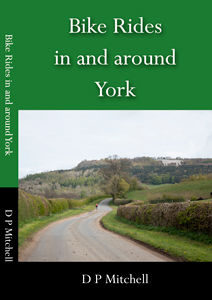
Bike Rides In and Around York features a historical city tour, plus family rides, road rides, and mountain bike rides.
Find out more about Bike Rides In and Around York or buy a copy.
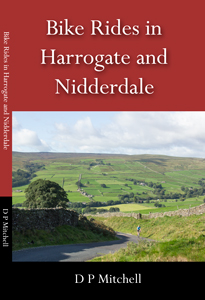
Bike Rides in Harrogate and Nidderdale is a book of family, mountain and road bike rides.
Find out more about Bike Rides in Harrogate and Nidderdale or buy a copy.
On 11th June 2023, the Etape Bilbao was held - a sportive event on the route of Stage 1, but with a shorter alternative route.
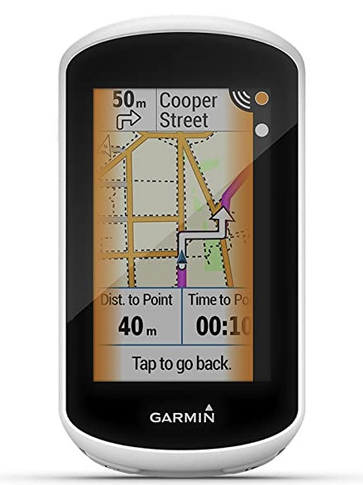
Garmin Edge Explore, £220 at the time of writing.
Garmin Edge Explore on Amazon.