Yorkshire cycling website

Stage 1, Tour de Yorkshire 2019
Stage 1, Tour de Yorkshire 2019: race report & video
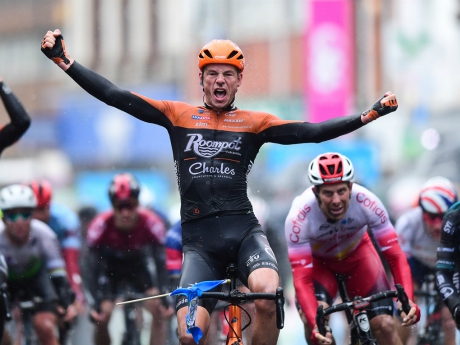
Jesper Asselman, part of the day's breakaway, launched his sprint early in Selby, and just held off the chasing pack.
He said, 'Yorkshire is an awesome place to ride your bike and the fans are always incredible. It's fantastic that they came out in this weather, and it gives you goosebumps to ride through crowds like that. It's really cool to be here - like being in one of the Classics or the Grand Tours - the public are so enthusiastic. I will never forget today.'
What eloquent words from the Dutchman!
A video summary of the day's action.
Stage 1, Tour de Yorkshire 2019: stage guide
Stage 1 of the Tour de Yorkshire 2019 takes place on Thursday 2nd May 2019. It is 178.5km from Doncaster to Selby and is called the Heritage Stage.
Leaving Doncaster, the riders head north to Little Smeaton, then east to Snaith, across the river Ouse to Howden, and on to Brough and North Ferriby. Then the route continues north to Beverley, and passes through Middleton-on-the-Wolds and North Dalton before going west to Pocklington.
After Elvington, Stage 1 heads south west to Escrick and Cawood; then there will be a charge towards the finish in Selby.
Stage 1, Tour de Yorkshire 2019: map, facts and figures
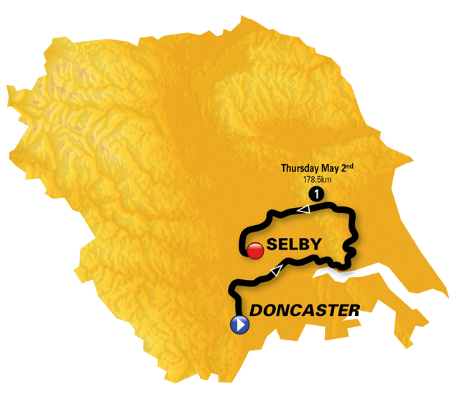
Welcome to Yorkshire have a detailed map of the race route.
| Date | Thursday 2nd May 2019 |
|---|---|
| Stage classification | Flat |
| Distance | 178.5km |
| Intermediate sprint | Elloughton Pocklington |
| Climbs | Côte de Baggaby Hill |
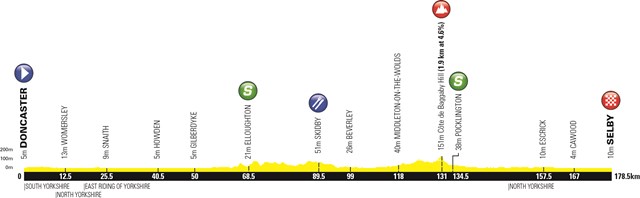
Stage 1, Tour de Yorkshire 2019: the route
Stage 1, Tour de Yorkshire 2019: the start in Doncaster
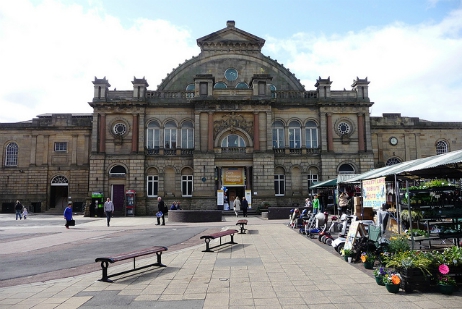
The riders will gather in front of the Corn Exchange, Doncaster, and roll out of town via Market Place, Scot Lane, High Street, Hall Gate, Thorne Road, East Laith Gate, Market Road, and St George's Way (A19), which takes them over the river Don.
At St Mary's roundabout, they continue on the A19 Bentley Road to Bentley. The flag goes down and the racing starts between Bentley and Toll Bar.
Stage 1, Tour de Yorkshire 2019: Doncaster to Beverley
After Toll Bar, the A19 heads into flat countryside, criss-crossed by little streams and drains. The race route reaches Askern, and here it leaves the A19, forking left towards Campsall and Little Smeaton.
After Little Smeaton the route continues north on the minor New Road to its junction with Bank Wood Road. Here, it's right to Womersley. At Womersley, the riders cross over the railway, and take Fulham Lane and Balne Moor Road to Pollington (site of a large concrete plant).
Now the route edges north east to Snaith. Here, it joins the A645, then A1041, heading east to West Cowick and East Cowick. It continues on the A614 to Rawcliffe, on the river Aire.
Beyond Rawcliffe, the competitors reach Airmyn, then cross the Ouse at Boothferry. They continue north east to Howden.
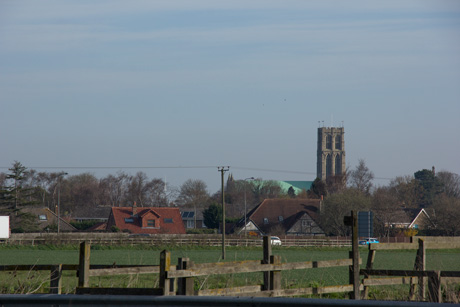
In Howden, they pick up the B1230, and head east across Balkholme Common to Gilberdyke.
Next on the route is Newport, where the riders leave the B1230, and take the narrow Wallingfen Lane south, then Common Road/Ellerker Lane, east to Ellerker.
Continuing east, the riders reach Brough/Elloughton, on the river Humber, and here the first intermediate sprint takes place.
Now it's on via Welton and Melton (but not Delton, Pelton, or Belton) to North Ferriby (at one end of the Sustrans route over the Humber Bridge).
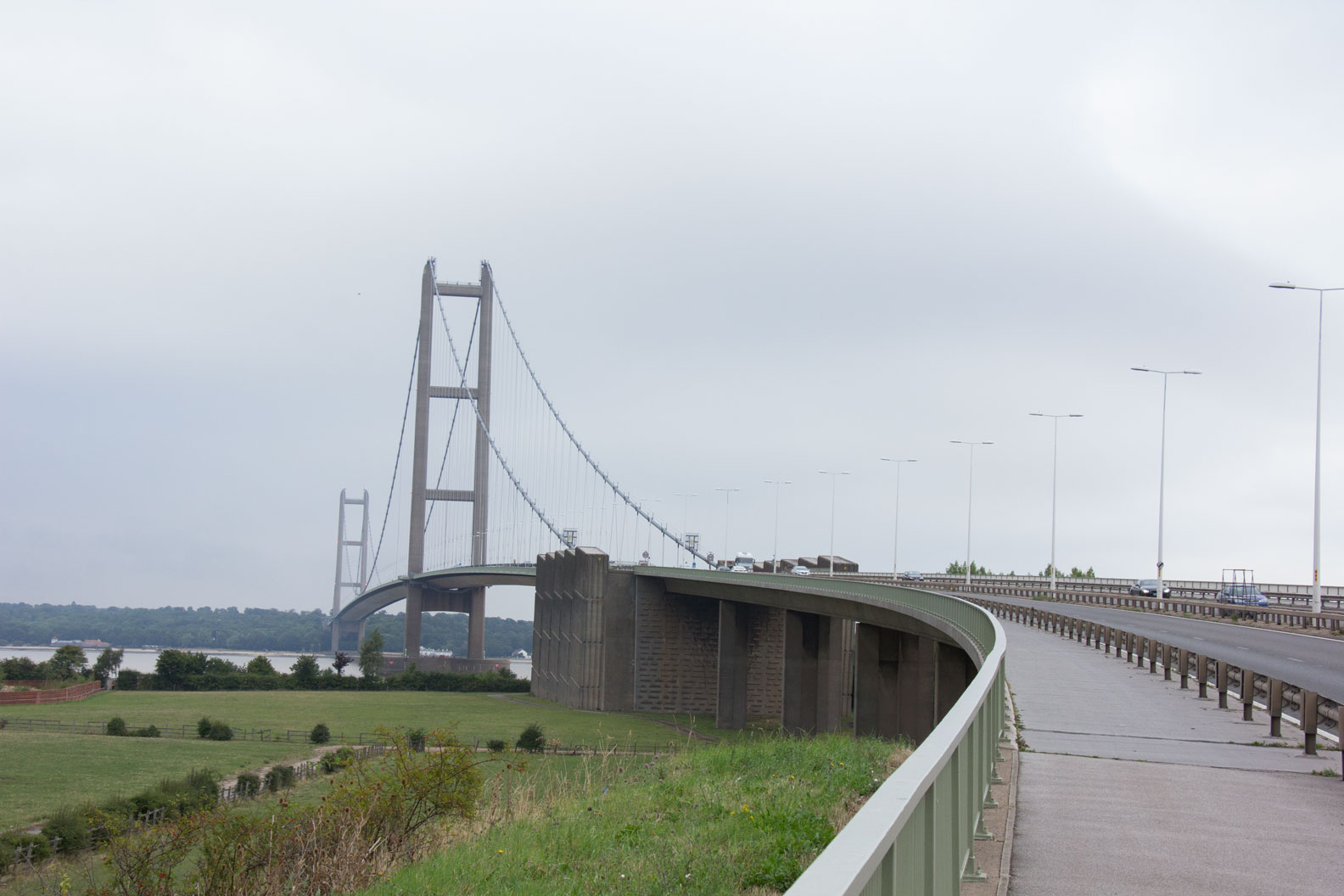
Then the riders head north to Swanland and Skidby, before going on to Little Weighton and Walkington.
They now approach Beverley on the B1230. In Beverley, they join the A164 Lairgate/North Bar Within/Molescroft Road.
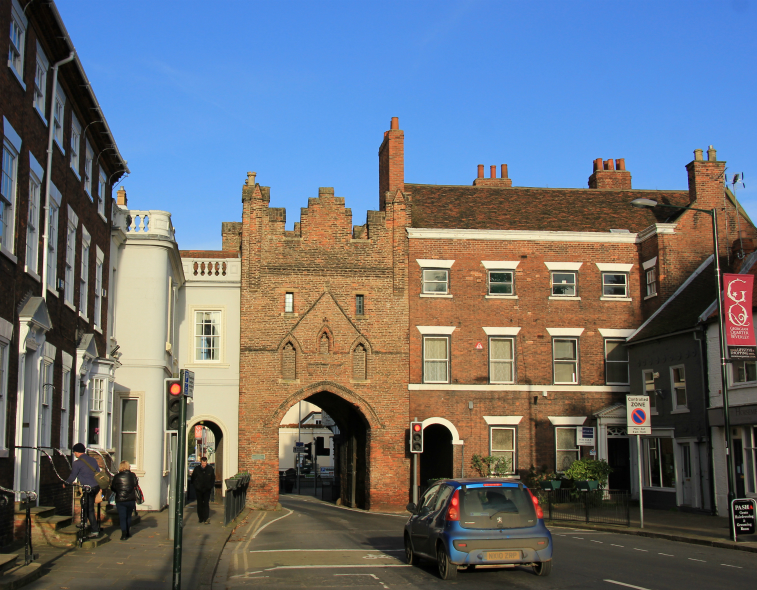
Stage 1, Tour de Yorkshire 2019: Beverley to Selby
Leaving Beverley via Molescroft, the route is north on the A164 to Leconfield and Scorborough, then west via Kilnwick to Middleton-on-the-Wolds.
Between Middleton-on-the-Wolds and North Dalton, the road rises to very nearly 70m above sea level. From North Dalton, the riders are on the B1246 Dalton Dale to Warter.
West of Warter is the only categorised climb on what is generally quite a flat course - Baggaby Hill, at 151m.
Then it's downhill towards Pocklington. The second intermediate sprint takes place just before the riders arrive in Pocklington.
Beyond Pocklington, the race continues west on the B1246 to Barmby Moor. There's a short stretch of the A1079, then the race route is on Sutton Lane, past Allerthorpe Common, and The Street/Sandhill Lane to Sutton-upon-Derwent, and Elvington on the other side of the river Derwent.
Here, Stage 1 heads south to Wheldrake, and continues west south west to Escrick and Stillingfleet. Now on the B1222, the riders head for Cawood, where they cross the Ouse.
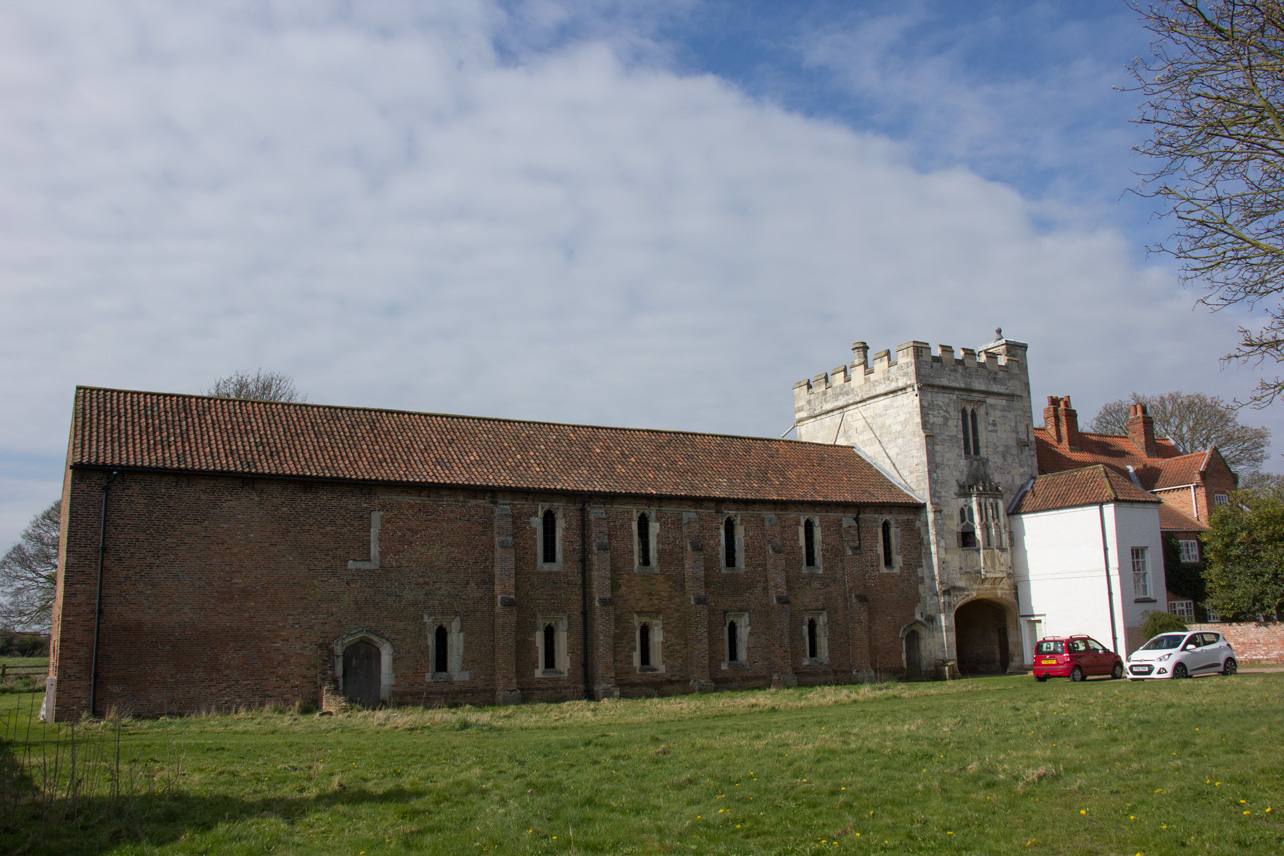
At Cawood, they leave the B-road and continue to Thorpe Willoughby.
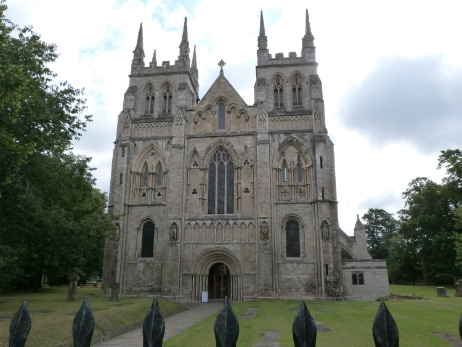
From Thorpe Willoughby, all that remains is a sprint east on the A1238 to Selby. The finish line is on the A1238 near Selby Abbey.
UCI
2019 Worlds

The UCI 2019 road World Championships take place in Yorkshire, from 21st to 29th September 2019. News, and events & routes, with details, photos, and best places to watch the action.
Read about the 2019 UCI road World Championships.
Stage 1, Tour de Yorkshire 2019: towns, sights, and attractions
Stage 1, Tour de Yorkshire 2019: Doncaster
Doncaster is a market town on the river Don, with a population of 109,805 (2011 census).
It grew up around a Roman fort called Danum, built in the C1st AD on the river Don (the site of St George's Minster today). The fort was on a Roman route from Lincoln to York.
Doncaster's charter for a market was granted in 1248. More recently, its population expanded due to coal mining in the area. Coal mining has declined, but Doncaster remains a distribution centre, due to its good transport links. Other industries include glass, and wire rope, manufacture.
Amongst the attractions in Doncaster today are Doncaster Museum & Art Gallery, The Dome sports & leisure centre, Cusworth Hall & Country Park, and shopping at Doncaster Market and Frenchgate. The local football team is Doncaster Rovers, and there's a rugby league side, Doncaster RLFC.
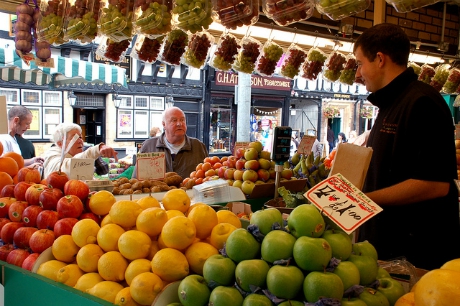
Stage 1, Tour de Yorkshire 2019: Howden

Howden is a small market town near Goole.
It was given to the Bishop of Durham by William the Conqueror in 1080. The Bishop gave Howden's church to the monks of Durham.
The church was replaced with a Minster, built from 1228 until sometime in the 1400s. It had fallen to ruins by the mid-1700s, but renovations were undertaken in the C20th, and completed in 1932. It has choir stalls by Mousy Thompson.
During World War I, there was an airship station at Howden (RNAS Howden), with airship hangars for airships which provided protection to the east coast from U-boats.
Businesses in Howden include the Press Association, ebuyer.com, and Wren Kitchens.
Stage 1, Tour de Yorkshire 2019: Beverley
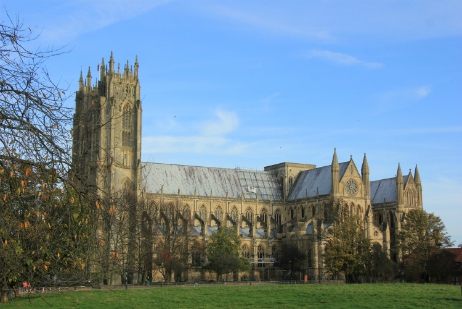
Beverley is a market town, and the county town of the East Riding of Yorkshire. It has a population of 30,587 people (2011 census).
History
Beverley was founded around 700AD by St John of Beverley, who was Bishop Of York, and who built a church and founded a monastery here. At the time it was called Inderawuda (in the wood of the men of Deira), but its name was changed to Bevreli (beaver lake). In Anglo-Saxon times, Beverley became one of the most important Christian centres in northern England.
After the Norman conquest, many pilgrims visited Beverley, inspired by stories of miracles associated with John of Beverley. Beverley was also a trading town, selling wool to cloth makers in the Low Countries. By 1377, it was the tenth largest town in England.
Thereafter, Beverley declined gently, albeit it was still the main market town for the surrounding area. While Hull was bombed during World War II, Beverley escaped largely unscathed.
Some of the historic entrances to the town, such as the brick-built bars, were taken down due to an increase in population, but the North Bar remains.
Beverley today
Beverley has the oldest state school in England, Beverley Grammar School, which was founded by John of Beverley in 700AD. Thomas Percy, who was involved in the gunpowder plot, went there, as did goalie Paul Robinson.
As well as the Minster, which has a tomb containing the bones of John of Beverley, there are two other C of E churches, St Mary's and St Nicholas.
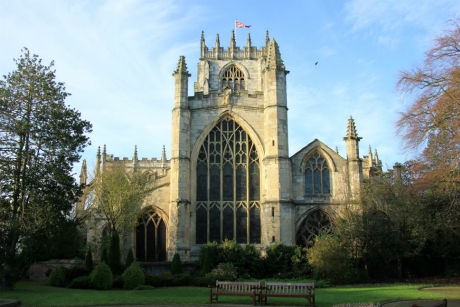
There's also a Roman Catholic church, three Methodist churches, and a Quaker meeting house.
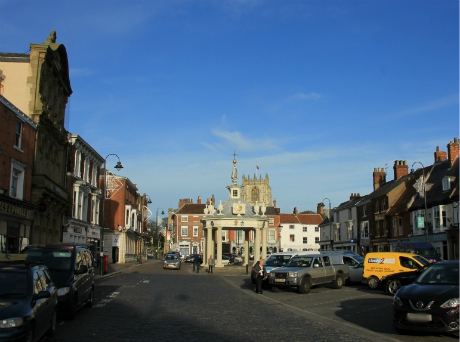
The main market day is Saturday, with a smaller market on Wednesdays. There are plenty of cafés in Beverley, and many (over 40) pubs.

Beverley has a well-known racecourse to the west of the town centre.
Stage 1, Tour de Yorkshire 2019: Pocklington
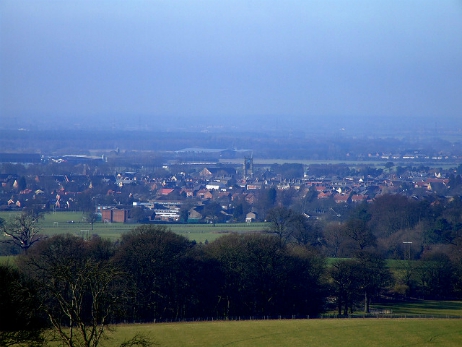
Pocklington is a small market town in the Yorkshire Wolds, dominated by the C15th tower of All Saints' church.
In the Middle Ages, Pocklington was a local centre for trading wool. These days, it is home to many commuters to York.
Stage 1, Tour de Yorkshire 2019: Selby
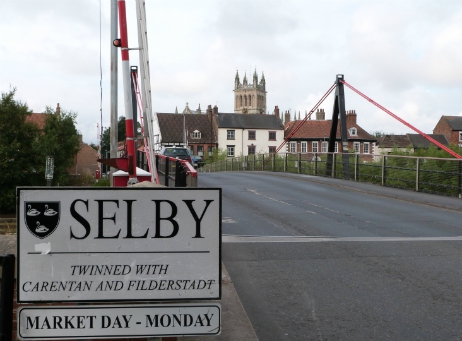
Selby is a town of 15,000 people on the river Ouse and the Selby canal.
It may have been a Roman settlement, and the Vikings definitely had a town on the banks of the Ouse here (Wikipedia). King Henry I may have been born here.
Selby Abbey was a working monastery until 1539, the Dissolution of the Monasteries. Thereafter, it became the parish church of Selby.
The Market Place has existed since the early C14th.
Selby was a centre for shipbuilding until 1998, when Cochrane & Son's shipyard launched their last vessel into the Ouse.
There was mining at the Selby Coalfield for a time. Now, Selby is close enough to Leeds and York to be a commuter town.